

Japan Mental Health Technology Market: Digital Care Advancing Diagnosis,Treatment Teletherapy Surge & Workplace Wellness
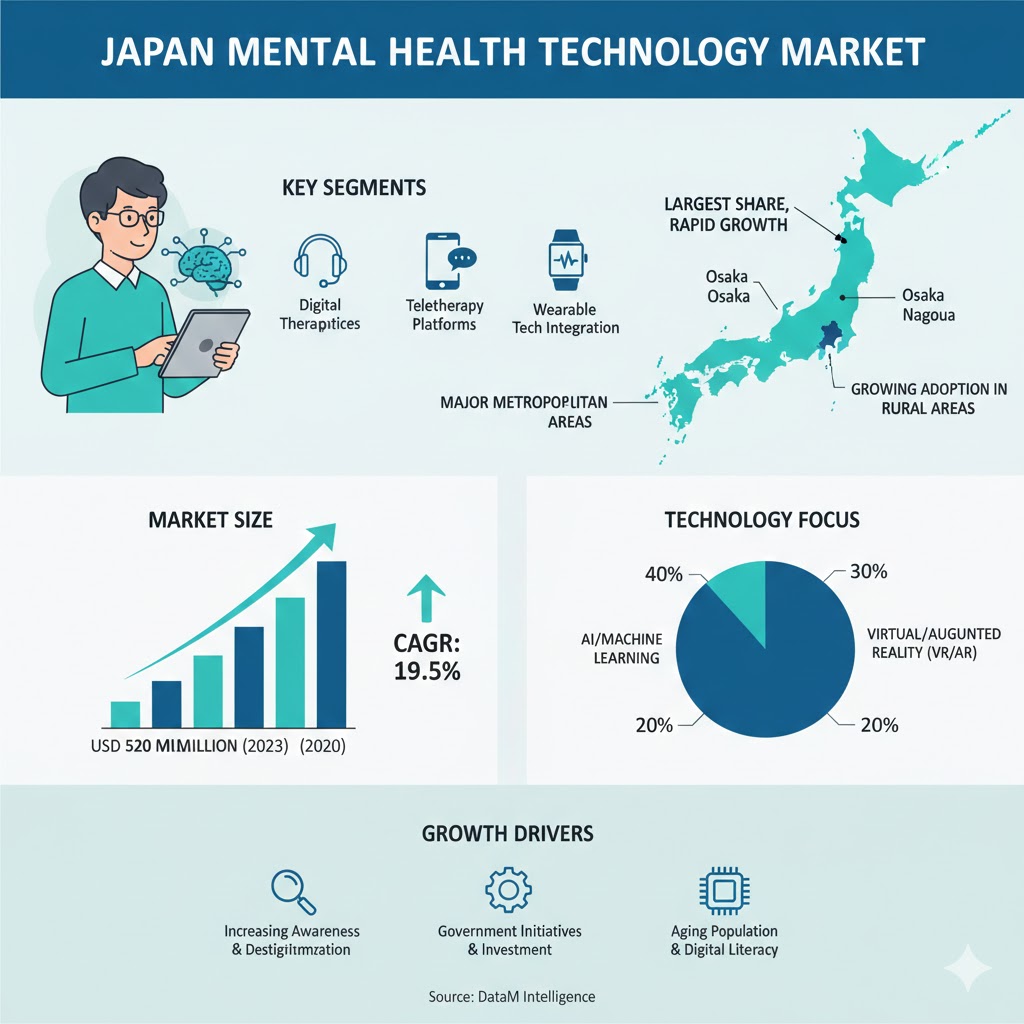
Japan Mental Health Technology Market
Japan Mental Health Technology Market to reach US$22.67B by 2033, driven by AI diagnostics, telepsychiatry,digital therapeutics and workplace wellness adoption.
Japan’s mental health technology market is entering a transformative phase, driven by AI-powered diagnostics, telepsychiatry adoption, and growing workplace wellness investments nationwide.”
OSAKA, OSAKA, JAPAN, February 9, 2026 /EINPresswire.com/ -- Mental Health Technology Market reached US$ 7.97 billion in 2024 and is expected to reach US$ 22.67 billion by 2033, growing at a CAGR of 12.8% during the forecast period of 2025-2033.— DataM Intelligence
Japan is witnessing a significant shift in how mental health and mental wellness are perceived and addressed. Rising awareness of mental issues, changing workplace dynamics, aging demographics, and post-pandemic psychological stress have accelerated the adoption of mental health technology across the country. From digital platforms supporting depression, anxiety, and bipolar disorder to AI-enabled tools for early detection of schizophrenia and personality disorder symptoms, technology is reshaping Japan’s mental healthcare ecosystem.
➢ Get a Exclusive Sample PDF Of This Report (Get Higher Priority for Corporate Email ID):- https://www.datamintelligence.com/download-sample/mental-health-technology-market
Growing Mental Health Challenges in Japan
Mental health conditions such as clinical depression, major depressive disorder, bipolar depression, obsessive compulsive disorder (OCD), schizoaffective disorder, and borderline personality disorder are becoming more visible in Japan. Increasing searches for signs of depression, signs of anxiety, signs of bipolar disorder, and early signs of schizophrenia reflect a growing public willingness to seek help.
Issues like severe depression, anxiety attack, psychosis, and postpartum depression are no longer limited to clinical settings they directly impact families, workplaces, and communities. Women’s mental health, including signs of depression in women, post natal depression, and postpartum psychosis, is gaining particular attention as Japan addresses broader healthcare equity concerns.
Recent Developments:
✅ January 2026: Japan’s mental health apps segment continues strong momentum, with projections indicating the market could reach approximately USD 822.5 million by 2035. Growth is fueled by AI-powered personalization, corporate wellness integration, and rising smartphone penetration across all age groups.
✅ 2025: Several digital mental health platforms gained Class II medical device designation in Japan, enabling physician-prescribed digital therapeutics (DTx). This regulatory recognition significantly strengthened clinical adoption and reimbursement pathways.
✅ 2025: Corporate adoption accelerated as Japanese enterprises integrated digital stress monitoring and wellness platforms into employee benefit programs, supporting compliance with Japan’s mandatory workplace stress check system.
✅ 2024–2025: Integration of wearable devices such as smartwatches and biometric trackers expanded, allowing real-time monitoring of heart rate variability, sleep cycles, and stress indicators within mental health platforms.
➢ Get Customization in the report as per your requirements: https://www.datamintelligence.com/customize/mental-health-technology-market
Top Companies in Japan:
M3, Inc.
M3 is one of Japan’s most influential healthcare technology companies, with a strong footprint in digital mental health. The company has invested heavily in telepsychiatry platforms and AI-driven clinical decision support tools. Its recent initiatives focus on expanding online mental health consultations for depression, anxiety, and stress-related disorders, particularly through physician-facing digital ecosystems and remote patient engagement solutions.
CureApp, Inc.
CureApp specializes in digital therapeutics for mental and behavioral health. The company has secured significant venture funding to develop app-based treatments for stress, insomnia, and addiction-related conditions. CureApp recently launched clinically validated mobile therapy programs that support cognitive behavioral therapy (CBT), designed to complement physician-led treatment and reduce reliance on medication.
MICIN, Inc.
MICIN is a health-tech company actively investing in telemedicine and digital mental health services. Its recent product launches include integrated telepsychiatry platforms that allow hospitals and clinics to deliver remote mental health consultations. The company is also investing in AI-powered symptom assessment tools aimed at early detection of mood and anxiety disorders.
PSYCHIATRY Solutions Japan (PSJ)
PSJ focuses on workplace mental health and corporate wellness solutions. The company has invested in scalable digital platforms that offer employee mental health screening, counseling, and stress management programs. Recent service launches emphasize burnout prevention, depression screening, and employer-sponsored mental resilience programs for large enterprises.
Takeda Pharmaceutical Company (Mental Health Portfolio)
Takeda remains a major player in Japan’s mental health ecosystem through pharmaceutical innovation. The company continues to invest in R&D for treatments targeting depression, schizophrenia, and neuropsychiatric disorders. Recent launches and pipeline developments focus on next-generation therapies with improved safety profiles and long-acting formulations to enhance patient adherence.
Otsuka Pharmaceutical
Otsuka is a key investor in mental and neurological health, particularly in schizophrenia and bipolar disorder treatments. The company has launched advanced antipsychotic medications and digital adherence tools that support patient monitoring. Investments also include collaborations with digital health startups to integrate medication with behavioral health data platforms.
Ubie, Inc.
Ubie is an AI healthcare startup expanding rapidly into mental health diagnostics. The company has invested in symptom-checker algorithms that help identify depression, anxiety, and psychosomatic conditions early. Recent product enhancements focus on AI-driven mental health triage tools used by hospitals and employers to guide patients toward appropriate psychiatric care.
LITALICO Inc.
LITALICO focuses on developmental and mental health support services, especially for autism spectrum disorders, ADHD, and workplace mental wellness. The company has invested in digital education platforms and therapy tools tailored to neurodiverse populations. Recent service expansions include online counseling and structured mental skills training programs.
Overall Market Direction:
Japan’s mental health companies are increasingly investing in digital therapeutics, telepsychiatry, AI-based diagnostics, and workplace mental wellness platforms. Product launches emphasize accessibility, early diagnosis, and integration with existing healthcare systems, aligning with national priorities to address rising stress, depression, and aging-related mental health challenges.
Role of Mental Health Technology in Early Diagnosis and Treatment:
Mental health technology platforms are enabling early depression screening, depression diagnosis, and access to mental health professionals near me through telepsychiatry and virtual counseling. Digital tools now support clinical mental health counseling, talking therapies, and evidence-based depression treatment and anxiety treatments.
Advanced platforms are increasingly used to support:
Bipolar disorder diagnosis and bipolar disorder treatments
Monitoring bipolar 1, bipolar 2 disorder, and bipolar affective disorder
Managing schizophrenia treatment, including paranoid schizophrenia treatment
Supporting individuals living with manic depression, manic bipolar disorder, and mood disorder
These technologies improve access to mental health clinics near me, mental institutions, and residential mental health facilities, particularly for individuals hesitant to seek in-person care due to stigma.
Mental Health in the Workplace: A Growing Priority in Japan
Japan’s work culture has brought mental health in the workplace into sharp focus. Employers are increasingly adopting mental wellness programs for employees, mental health coaching, and digital solutions addressing psychological stress, severe anxiety, and depression and anxiety.
Corporate adoption of mental health wellness in the workplace supports:
Employee mental wellbeing
Early intervention for mental health issues caused by workplace stress
Reduced burnout and absenteeism
Long-term emotional health and productivity
These initiatives align with Japan’s broader emphasis on mental health promotion and positive mental health.
Social Media, Youth, and Community Mental Health
The impact of social media and mental health is a growing concern, especially among students and young adults. Rising cases of signs of depression in teens, social anxiety disorder symptoms, and mental health issues among students are driving demand for digital mental health resources.
Community-based platforms now integrate mental health resources, community mental health, and support networks addressing living with depression, coping with depression, and fighting depression. These tools also assist caregivers and families in helping someone with depression and managing mental illness at home.
➢ Buy Now & Unlock 360° Market Intelligence: https://www.datamintelligence.com/buy-now-page?report=mental-health-technology-market
Awareness Initiatives and Public Engagement
Campaigns around mental health awareness, mental health awareness month, world mental health day, and mental health day are accelerating acceptance of digital mental health solutions in Japan. Collaboration with mental health organizations, mental health charities, and public health initiatives is helping reduce stigma and improve access to mental help near me.
The growing belief that mental health is health is shaping policy discussions, digital innovation, and investment in mental health systems across the country.
Future Outlook of the Mental Health Technology Market in Japan
The Japan Mental Health Technology Market is expected to evolve toward personalized, data-driven care models integrating AI diagnostics, remote monitoring, and digital therapeutics. As awareness grows around mental disorders list, types of mental illness, and mental health conditions, technology will play a vital role in early intervention, continuity of care, and long-term recovery.
By strengthening access to mental health treatment, supporting healthy minds, and improving mental wellbeing, mental health technology is set to become a cornerstone of Japan’s modern healthcare landscape.
About the Market
The Mental Health Technology Market includes digital platforms, software solutions, AI tools, and virtual care services designed to support diagnosis, treatment, and management of mental health disorders such as depression, anxiety, bipolar disorder, and schizophrenia, promoting mental wellness across populations.
Related Reports:
Mental Health Software Market
Mental Health Apps Market
Sai Kiran
DataM Intelligence 4market Research LLP
+1 877-441-4866
email us here
Visit us on social media:
LinkedIn
YouTube
X
Legal Disclaimer:
EIN Presswire provides this news content "as is" without warranty of any kind. We do not accept any responsibility or liability for the accuracy, content, images, videos, licenses, completeness, legality, or reliability of the information contained in this article. If you have any complaints or copyright issues related to this article, kindly contact the author above.
